
More than four years after its original release, Gran Turismo 7 remains one of the most polished racing experiences available on PlayStation. Developed by Polyphony Digital for PS4 and PS5, the game combines realistic driving physics, an enormous collection of cars, competitive online racing, detailed tuning, and an almost obsessive appreciation for automotive culture.
What makes the game especially interesting in 2026 is how much it has evolved. Polyphony Digital has continued releasing new cars, circuits, events, and major updates, meaning today’s Gran Turismo 7 is considerably richer than the version launched in March 2022.
Driving Remains Gran Turismo 7’s Greatest Strength
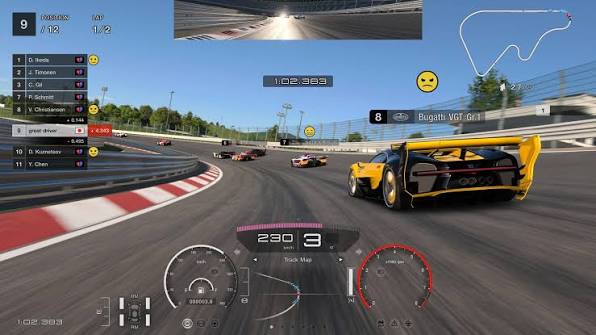
The handling model is still the star of the experience. Cars behave differently depending on drivetrain, tires, suspension, power delivery, weight distribution, and weather conditions.
A lightweight rear-wheel-drive sports car demands a very different approach from a heavy all-wheel-drive performance machine. Braking too late can unsettle the chassis, while poor throttle control can quickly punish drivers exiting corners.
Gran Turismo 7 manages to occupy an appealing middle ground between accessibility and simulation. New players can rely on assists, while experienced drivers using racing wheels can extract considerably more depth.
DualSense support on PS5 is excellent as well. Adaptive triggers communicate braking resistance and wheelspin, while haptic feedback helps reproduce subtle differences between asphalt, curbs, and changing grip levels.
Cars Look Almost Too Good to Drive
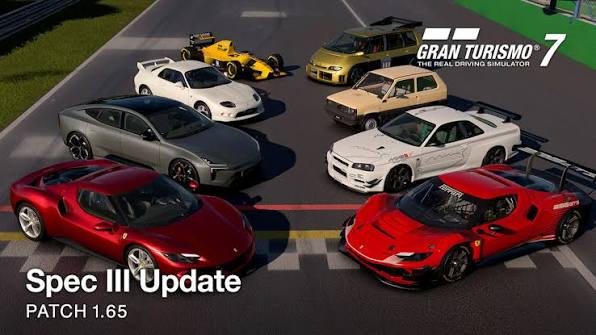
Presentation remains another major strength. Vehicle models are extraordinarily detailed, from headlights and paint reflections to dashboards and interior materials.
The game already featured 530 cars by July 2025, and additional updates since then have expanded the garage even further.
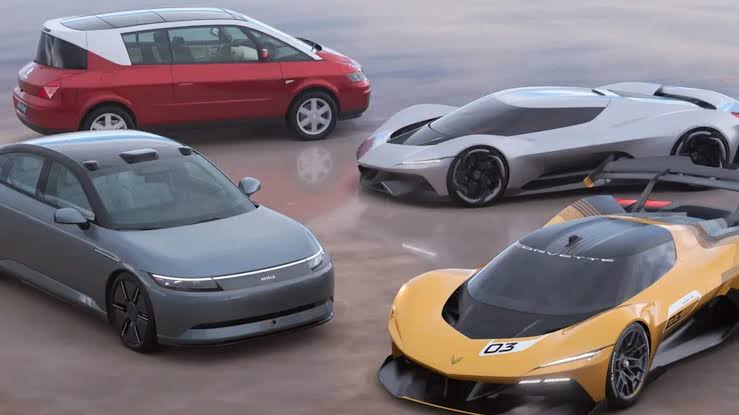
The August 2026 Update 1.71 added four more vehicles: the Caterham Seven Superlight R500, Hyundai IONIQ 6 N, Toyota Chaser Tourer V, and Toyota Mark II Tourer V. Three additional World Circuit events were included as well.
This steady expansion gives collectors plenty to chase, although obtaining expensive legendary cars can still require significant credit grinding.
Career Progression Is Charming but Sometimes Restrictive
The Café Menu system guides players through automotive history by asking them to collect specific cars and complete themed events.
It is an effective introduction to manufacturers, racing categories, and different periods of automotive development. However, the structure can also feel restrictive compared with the more open career progression of older Gran Turismo games.
The economy remains one of the game’s weakest areas. Some desirable vehicles require large amounts of credits, and optional microtransactions continue to exist.
Gran Turismo 7 also remains heavily dependent on an internet connection for much of its functionality, which limits what players can access when offline. That design choice continues to attract criticism from part of the community.
Spec III Made the Game Even Bigger

December 2025 brought the substantial Spec III update, adding eight cars alongside Yas Marina Circuit and Circuit Gilles-Villeneuve.
The update also introduced a Data Logger, expanded Weekly Challenges, increased the Collector Level cap to 70, improved online racing, and added further Café and Circuit Experience activities.
For players wanting more structured motorsport, the optional Power Pack DLC adds 50 races spread across 20 categories. It introduces race weekends featuring practice, qualifying, and full races, while using Gran Turismo Sophy 3.0 AI for more competitive opponents.
These additions help address one long-standing criticism: that GT7 sometimes feels more like a car-collecting experience than a full motorsport career.
PS VR2 Takes Immersion to Another Level
On PS5, Gran Turismo 7 is also one of the strongest showcases for PlayStation VR2.
Players can experience races from inside the cockpit while naturally looking toward corners and surrounding cars. A dedicated VR Showroom lets users inspect interiors and exterior details at close range, while eye-tracked foveated rendering helps maintain high visual quality.
Combined with a steering wheel and pedals, GT7 becomes remarkably convincing.
Gran Turismo 7 Rating
| Category | Score |
|---|---|
| Driving Physics | 9.6/10 |
| Car Selection | 9.5/10 |
| Graphics | 9.6/10 |
| Audio | 9.2/10 |
| Career Mode | 8.3/10 |
| Tuning & Customization | 9.3/10 |
| Online Racing | 9.0/10 |
| VR Experience | 9.7/10 |
| Replay Value | 9.4/10 |
| Overall Rating | 9.3/10 |
Conclusion
Gran Turismo 7 is not flawless. Its credit economy can feel slow, Café progression occasionally limits freedom, and the dependence on online connectivity remains unnecessary.
Yet once a race begins, those problems become easier to forgive. Few console racing games combine authentic handling, extraordinary car detail, motorsport history, customization, photography, online competition, and VR this effectively.
The game holds an 87 Metascore, reflecting the strong critical reception it received at launch, although its substantially lower user score shows how divisive certain progression and economy decisions have been.
With Spec III, the Power Pack, and continuing 2026 updates, Gran Turismo 7 has matured into an even stronger package. For PlayStation owners interested in cars or sim racing, it remains one of the easiest racing games to recommend.
Editorial score: 9.3/10.